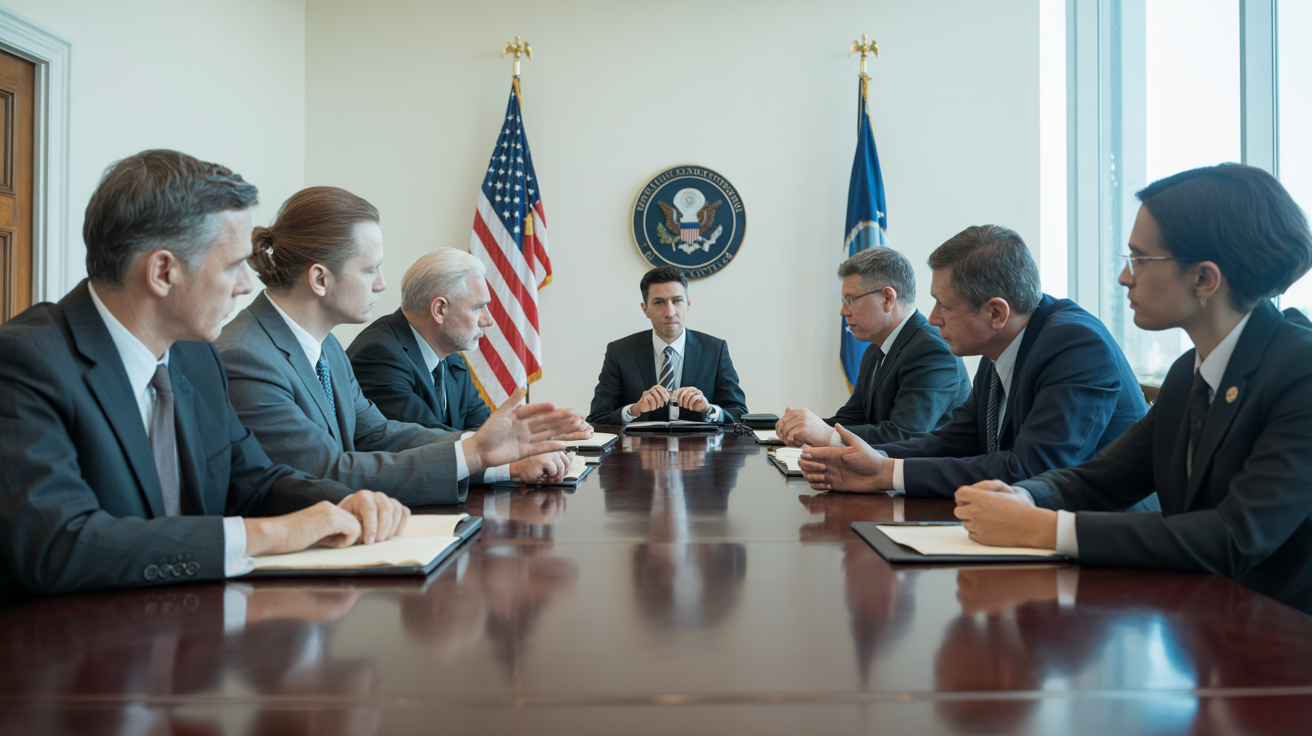
The Securities and Exchange Commission hosted executives from Coinbase, Uniswap, and the New York Stock Exchange at a landmark crypto trading roundtable on April 11, signaling a dramatic shift away from the agency’s enforcement-first approach toward collaborative industry dialogue that could reshape the regulatory landscape for digital assets.
The four-hour discussion—titled “Between a Block and a Hard Place: Tailoring Regulation for Crypto Trading”—brought together companies the SEC had previously sued alongside traditional finance leaders to explore how existing securities laws might be adapted for cryptocurrency markets rather than simply imposed through enforcement actions.
From Adversaries to Advisors
The composition of the April 11 roundtable represents a stunning reversal in the SEC’s relationship with the crypto industry. Among the panelists invited to SEC headquarters were Katherine Minarik, Chief Legal Officer at Uniswap Labs, and Gregory Tusar, Vice President at Coinbase—representatives of two companies the SEC has actively pursued in federal court.
The SEC sued Coinbase in June 2023, alleging the exchange operated as an unregistered securities exchange, broker, and clearing agency. The agency charged Uniswap Labs in April 2024, claiming the decentralized exchange protocol facilitated unregistered securities transactions. Both companies have vigorously contested the SEC’s legal theories, arguing that the tokens traded on their platforms do not constitute securities under existing law.
Now, less than a year after suing Uniswap and nearly two years after charging Coinbase, the SEC is inviting these same companies to help shape regulatory frameworks for crypto trading. The shift is not subtle.
“This represents a complete 180-degree turn in the SEC’s posture,” said one crypto industry lawyer who attended the roundtable. “We’ve gone from being defendants to being treated as stakeholders whose input is valued.”
The roundtable also included representatives from Cumberland DRW, another firm that had been in the regulator’s crosshairs, alongside executives from FalconX, Texture Capital, and traditional finance institutions like the NYSE.
The Crypto Task Force’s Mission
The April 11 event was the second in a series of roundtables organized by the SEC’s Crypto Task Force, led by Commissioner Hester Peirce, who has long advocated for clearer, more workable cryptocurrency regulations.
Established in January 2025 by Acting SEC Chairman Mark T. Uyeda following the change in presidential administration, the Crypto Task Force aims to “draw clear regulatory lines, provide realistic paths to registration, craft sensible disclosure frameworks, and deploy enforcement resources judiciously.”
The task force’s approach stands in stark contrast to the SEC’s posture under former Chairman Gary Gensler, who championed what critics called “regulation by enforcement”—pursuing legal actions against crypto firms while declining to provide clear guidance on how companies could comply with securities laws.
Commissioner Peirce framed the roundtable series as an opportunity for genuine dialogue. “The Crypto Task Force roundtables are an opportunity for us to hear a lively discussion among experts about what the regulatory issues are and what the Commission can do to solve them,” she stated when announcing the April schedule.
The “Spring Sprint Toward Crypto Clarity” series includes four roundtables addressing critical regulatory challenges:
- April 11: Crypto Trading (market structure and platform regulation)
- April 25: Crypto Custody (safeguarding digital assets)
- May 12: Tokenization (real-world asset digitization)
- June 6: Decentralized Finance (DeFi protocols and governance)
Each roundtable runs four hours and is webcast publicly, signaling the SEC’s commitment to transparency in developing its regulatory approach.
Key Topics and Industry Concerns
According to participants, the April 11 roundtable focused on fundamental tensions between crypto market architecture and traditional securities regulation designed for centralized intermediaries.
Vertically Integrated Platforms: Unlike traditional markets where trading, custody, and clearing functions are separated across multiple regulated entities, many crypto platforms integrate these services. Panelists discussed whether existing rules requiring functional separation make sense for blockchain-based systems where smart contracts can handle multiple roles efficiently and transparently.
Broker-Dealer Registration: The discussion addressed whether crypto platforms that facilitate peer-to-peer trading without taking custody of assets should be required to register as broker-dealers under frameworks designed for traditional intermediaries. Industry representatives argued that forcing decentralized protocols into centralized compliance models could stifle innovation without meaningfully protecting investors.
SEC-CFTC Jurisdictional Coordination: Multiple panelists emphasized the need for clearer boundaries between the SEC’s jurisdiction over securities and the Commodity Futures Trading Commission’s authority over commodities. The longstanding regulatory ambiguity about which tokens fall under which agency’s purview creates compliance challenges that force companies to navigate conflicting requirements or avoid the U.S. market entirely.
Self-Custody and Risk: Traditional securities regulation assumes intermediaries hold customer assets, creating custody risks that justify extensive oversight. Crypto market participants noted that blockchain technology enables self-custody, where users control their own assets through private keys. Panelists explored whether regulatory frameworks should differentiate between platforms that take custody and those that merely facilitate peer-to-peer transactions.
Christine Parlour from UC Berkeley and Tyler Gellasch from Healthy Markets provided academic and investor protection perspectives, ensuring the discussion balanced innovation concerns with safeguards against fraud and market manipulation.

Philosophical Shift in Regulatory Approach
Beyond the specific policy discussions, the roundtable’s very existence signals a fundamental change in the SEC’s philosophical approach to crypto regulation.
Under the Gensler leadership, the SEC’s strategy centered on enforcement actions against prominent crypto firms, asserting that most tokens are securities and that companies must “come in and register.” Critics argued this approach was circular: companies couldn’t register because the SEC hadn’t created appropriate registration frameworks for digital assets, yet faced enforcement for operating without registration.
The Crypto Task Force roundtables represent a shift toward what industry participants hope will become “regulation through rulemaking”—developing clear, prospective rules that companies can follow rather than establishing legal precedents through after-the-fact enforcement actions.
“Moving beyond an enforcement-led strategy, the SEC is engaging with market participants,” noted legal analysis from Ropes & Gray following the roundtable. The firm’s assessment highlighted the collaborative and exploratory tone, with SEC officials appearing genuinely interested in understanding technological realities before crafting rules.
This approach aligns with broader changes in the crypto regulatory environment following the 2024 presidential election. President Trump, who campaigned on crypto-friendly policies, has appointed regulators sympathetic to digital asset innovation. Acting SEC Chairman Uyeda has taken steps to roll back some of Gensler-era enforcement priorities and create space for industry dialogue.
The philosophical shift is perhaps best captured by the invitation list itself: bringing previously-sued companies to the table as constructive participants rather than adversaries demonstrates the SEC’s recognition that workable regulation requires industry expertise and buy-in.
What Comes Next
The April 11 roundtable did not produce immediate regulatory changes or policy announcements. Instead, it represents the beginning of what could be a months-long process of stakeholder engagement, policy development, and potential rulemaking.
Industry observers are watching for several potential outcomes:
Exemptive Relief: The SEC could issue no-action letters or exemptive orders providing regulatory clarity for specific business models or activities without requiring full congressional action. This would allow crypto platforms to operate legally while broader regulatory frameworks are developed.
Updated Guidance: The agency could publish interpretive guidance clarifying how existing securities laws apply to digital assets, addressing longstanding questions about token classifications, custody arrangements, and trading platform obligations.
Formal Rulemaking: If the roundtable discussions identify consensus around new approaches, the SEC could initiate formal rulemaking processes to create regulations specifically tailored to crypto markets. This would be the most comprehensive but also most time-consuming path.
Inter-Agency Coordination: Discussions may produce recommendations for clearer SEC-CFTC coordination through memoranda of understanding or joint policy statements delineating jurisdictional boundaries.
The upcoming roundtables on custody (April 25), tokenization (May 12), and DeFi (June 6) will address equally critical regulatory questions. Each session provides opportunities for the SEC to gather industry input on technical realities and practical constraints before establishing rules.
Market and Industry Reaction
Crypto markets showed muted price reactions to the roundtable, with Bitcoin and major altcoins trading within normal ranges. However, industry sentiment has improved markedly as participants interpret the SEC’s engagement as a positive signal for regulatory clarity.
Coinbase and Uniswap executives expressed cautious optimism about the dialogue. While legal battles continue in federal courts, the companies view the roundtable as evidence that the SEC is genuinely interested in finding regulatory solutions rather than simply pursuing enforcement actions.
Traditional finance participants like NYSE representatives engaging in these discussions signals that institutional interest in crypto infrastructure remains strong despite regulatory uncertainties. The involvement of established financial institutions lends credibility to arguments that crypto markets deserve tailored regulatory frameworks rather than being shut out of traditional finance systems.
Some consumer advocates and crypto skeptics have expressed concerns that the industry-friendly tone might lead to inadequate investor protections. They argue the SEC should not abandon enforcement or lower standards simply because the political winds have shifted.
The Healthy Markets Association, represented at the roundtable by Tyler Gellasch, has emphasized that any regulatory framework must protect retail investors from fraud, manipulation, and conflicts of interest—concerns that have been validated by numerous crypto platform failures and fraud cases in recent years.
Broader Regulatory Context
The SEC roundtable occurs amid a flurry of crypto regulatory activity across multiple federal agencies in early 2025:
Federal Reserve: On April 24, the Fed announced it will rescind 2022 guidance that required banks to obtain supervisory approval before engaging in crypto activities. The withdrawal signals that banking regulators are also moving toward more accommodating stances on digital assets.
Stablecoin Legislation: Congress is actively debating stablecoin regulatory frameworks, with the GENIUS Act advancing through the Senate to establish federal oversight for dollar-backed digital tokens. This legislative activity could provide the statutory clarity that enables broader crypto market development.
CFTC Authority: The Digital Asset Market CLARITY Act, which passed the House with bipartisan support, would grant the CFTC explicit jurisdiction over “digital commodities” trading on sufficiently decentralized blockchains. This would address longstanding jurisdictional ambiguities between the SEC and CFTC.
International Competition: The United States is racing to establish regulatory frameworks before losing crypto industry innovation to overseas jurisdictions. The European Union’s Markets in Crypto-Assets (MiCA) regulation took effect in 2024, and countries like Brazil are approving crypto investment products ahead of the U.S., creating pressure on American regulators to act.
The SEC’s roundtable strategy appears designed to develop U.S. regulatory approaches quickly enough to retain domestic crypto industry while maintaining appropriate investor protections.
Historical Significance
If the Crypto Task Force’s efforts produce meaningful regulatory clarity and workable compliance pathways, the April 11 roundtable may be remembered as a turning point when the SEC shifted from treating crypto as an enforcement problem to treating it as a regulated industry deserving of tailored rules.
The contrast with previous years is striking. In 2023 and 2024, major crypto companies faced a barrage of SEC enforcement actions, exchange platforms struggled to maintain banking relationships, and industry leaders openly discussed relocating operations overseas to escape regulatory uncertainty.
Today, those same companies are sitting at the table with SEC commissioners, discussing how to build regulatory frameworks that accommodate blockchain technology’s unique characteristics while protecting investors and maintaining market integrity.
Whether this collaborative approach produces durable, effective regulation remains to be seen. The upcoming roundtables will test whether genuine consensus can emerge on contentious issues like token classification, DeFi governance, and custody standards.
For now, the crypto industry is cautiously optimistic that the era of regulation by enforcement may be giving way to regulation through dialogue—a shift that could determine whether the United States remains a leader in digital asset innovation or cedes that position to jurisdictions with clearer regulatory frameworks.
This article reflects information available as of April 13, 2025.