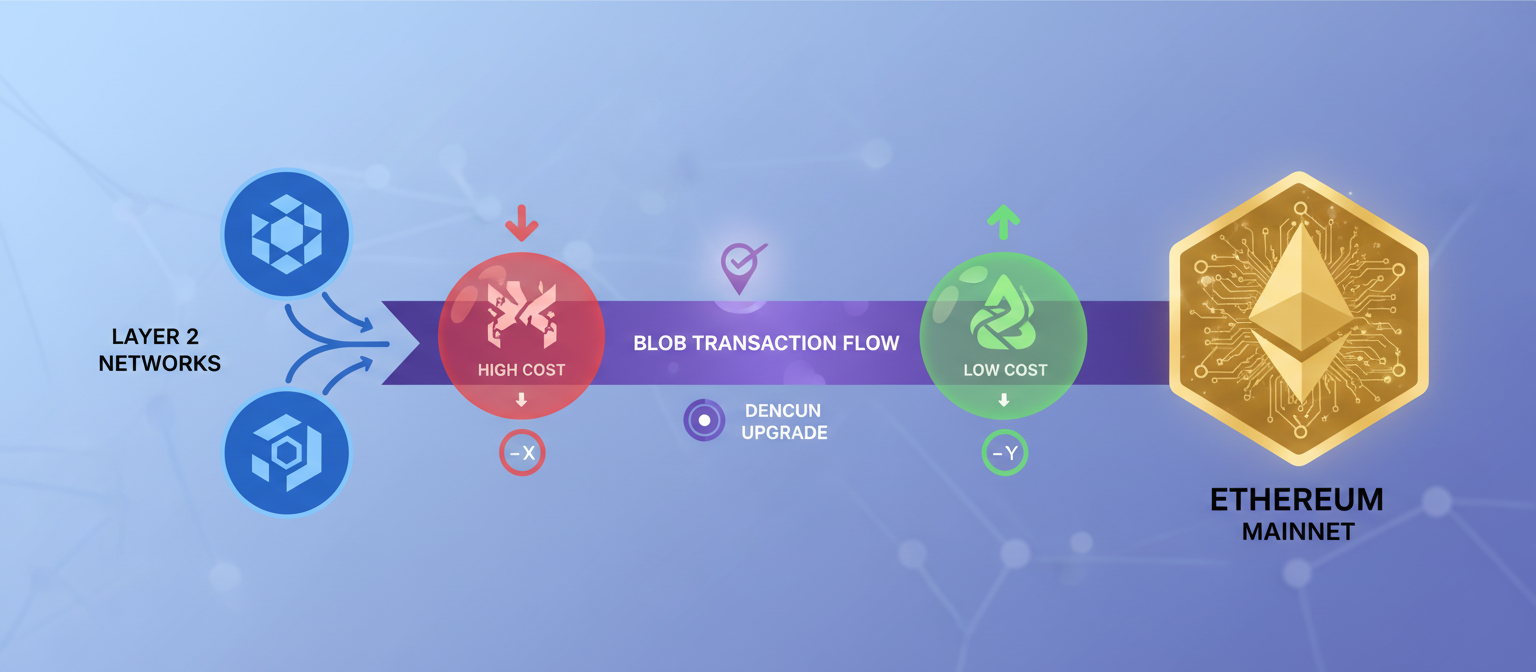
It has been one month since Ethereum successfully activated its historic Dencun upgrade, and the transformation in Layer 2 fee structures has been nothing short of revolutionary. Transaction costs across major scaling solutions have plummeted by up to 90%, fulfilling the upgrade’s core promise while simultaneously raising questions about Ethereum mainnet’s long-term revenue model.
The Dencun upgrade, which implemented proto-danksharding through EIP-4844, has fundamentally altered how Layer 2 networks interact with Ethereum’s base layer. By introducing “blobs” – a new, cheaper data storage mechanism separate from regular transactions – the upgrade has enabled rollups to post data to Ethereum at a fraction of previous costs.
The Fee Reduction Revolution
The impact on user costs has been immediate and substantial. Across major Layer 2 networks, average transaction fees have seen dramatic reductions:
- Arbitrum: Fees down from approximately $0.15 to $0.02 per transaction (87% reduction)
- Optimism: Costs reduced from $0.12 to $0.015 per transaction (87.5% reduction)
- Base: Fees dropped from $0.08 to $0.01 per transaction (87.5% reduction)
- zkSync: Transaction costs decreased from $0.10 to $0.012 per transaction (88% reduction)
These reductions have made Layer 2 solutions significantly more accessible to everyday users, potentially accelerating Ethereum’s path to mass adoption. The lower costs have already sparked increased activity across these networks, with daily transaction volumes rising 35-45% compared to pre-upgrade levels.
Technical Implementation Success
The technical rollout of proto-danksharding has exceeded developer expectations. Blob transactions have proven highly efficient, with each blob capable of storing approximately 125KB of data for a fraction of previous calldata costs. The implementation has been smooth, with minimal network disruptions or technical issues reported.
Ethereum Foundation’s Tim Beiko noted during a recent developer call that “the blob market has been functioning exactly as designed, providing ample capacity for Layer 2 needs while maintaining reasonable pricing mechanisms.” The successful implementation represents a major milestone in Ethereum’s multi-year scaling roadmap.
Layer 2 teams have rapidly integrated blob support into their systems. Arbitrum, Optimism, Base, and other major rollups began submitting data blobs within 24 hours of the upgrade’s activation. The transition has been seamless for end users, who immediately began benefiting from reduced costs without needing to change their behavior or applications.
Market Impact and Competition
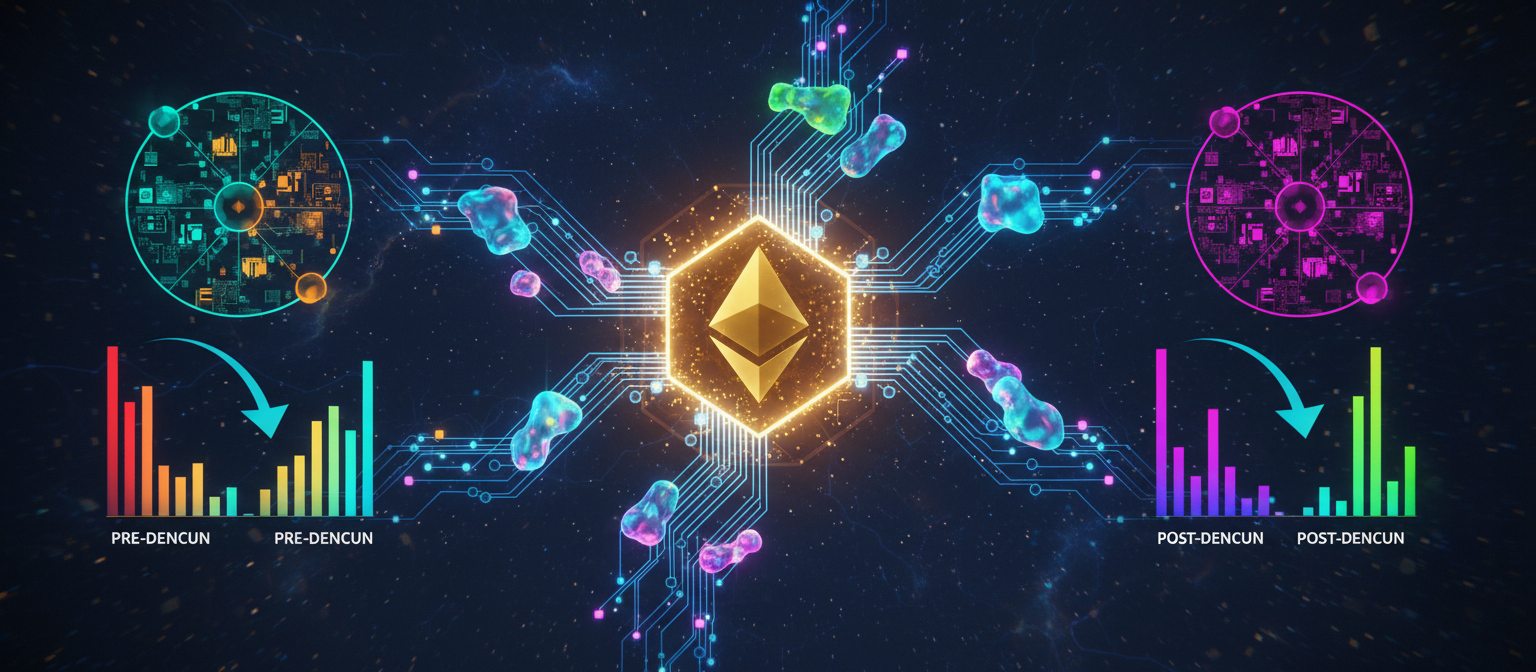
The dramatic fee reductions have intensified competition among Layer 2 networks, creating what some analysts are calling a “Layer 2 fee war.” With transaction costs converging toward zero across platforms, networks are increasingly differentiating themselves through other value propositions:
- Speed and finality times
- Ecosystem and application support
- Developer tools and documentation
- Cross-chain interoperability
- Security and decentralization metrics
Jesse Pollak, creator of Base, recently commented that “without an increase in usage, costs could fall down to 90% to 95%” – a prediction that has largely proven accurate. However, he emphasized that competition based purely on near-zero fees is “not sustainable” long-term.
The competitive dynamics have shifted focus toward ecosystem development and user experience. Networks are investing heavily in developer grants, documentation, and tooling to attract applications and users, recognizing that fee advantages alone will not guarantee long-term success.
Revenue Concerns for Ethereum Mainnet
While Layer 2 users celebrate reduced costs, the impact on Ethereum mainnet revenue has raised concerns among some stakeholders. Ethereum’s fee earnings, which totaled $2.48 billion in 2024, face potential pressure as more activity migrates to Layer 2 solutions with their dramatically reduced data posting costs.
However, analysts note that this revenue shift may be necessary for Ethereum’s long-term success. By making Layer 2 solutions more attractive, the upgrade could drive overall ecosystem growth, potentially offsetting mainnet revenue reductions through increased total network activity.
The Ethereum Foundation has emphasized that Dencun represents an investment in Ethereum’s future scalability. By reducing Layer 2 costs, the upgrade positions Ethereum to compete more effectively with alternative blockchain platforms and attract new users to the ecosystem.
Looking Ahead: Full Danksharding
Proto-danksharding is designed as an intermediate step toward full danksharding, which will further enhance Ethereum’s scalability. The current implementation uses blob-carrying transactions, while full danksharding will implement a more comprehensive sharding solution.
Developers expect full danksharding to be implemented over the next several years, with ongoing research and development continuing throughout 2025. The success of proto-danksharding has provided confidence that Ethereum’s scaling roadmap remains on track.
The Data Availability Ecosystem
The Dencun upgrade has also benefited emerging data availability (DA) layers like Celestia, EigenDA, and Avail. These specialized blockchains help networks store large amounts of data for rollups, and proto-danksharding has made the costs of downloading DA data cheaper.
The growing DA ecosystem represents an important infrastructure development for Ethereum’s scaling future. As Layer 2 networks continue to grow and mature, specialized DA solutions will play an increasingly important role in ensuring efficient and cost-effective data availability.
This analysis reflects information and market conditions as of February 28, 2025. Future developments may alter the outcomes described above.