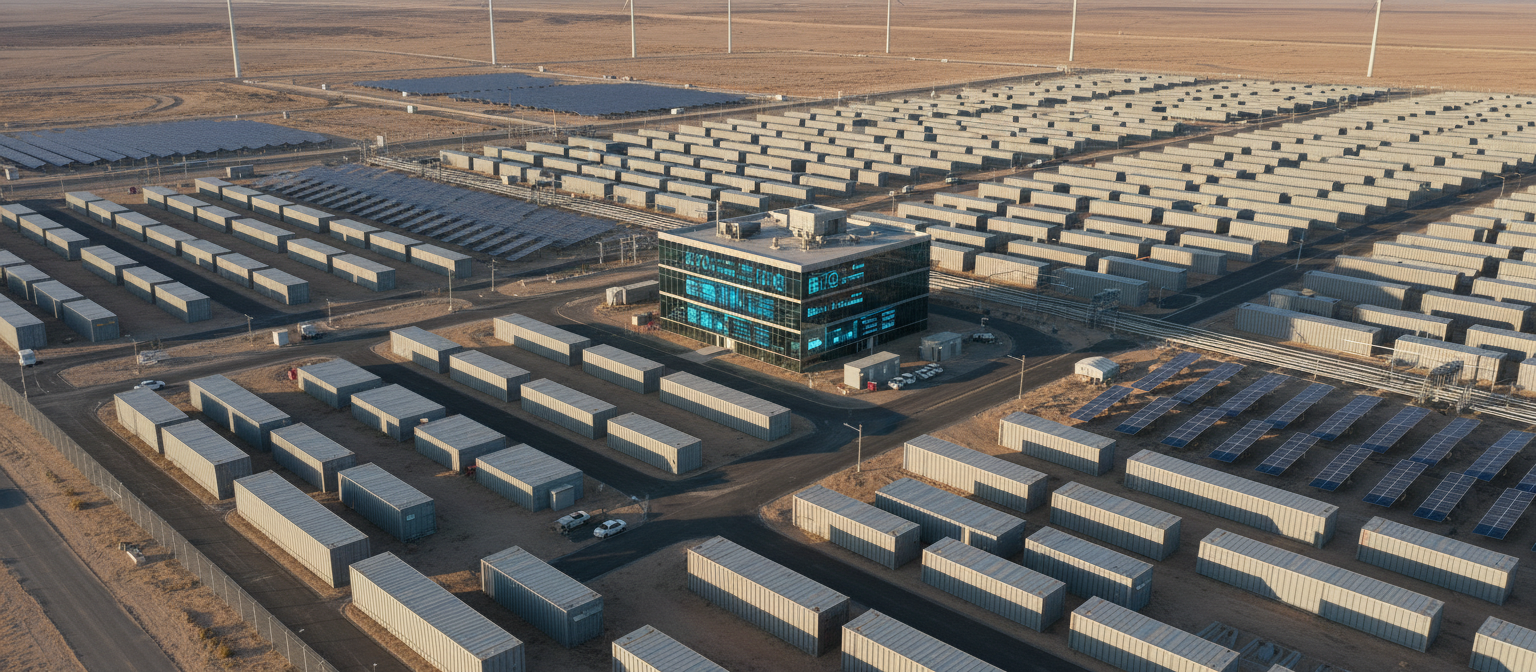
As Bitcoin enters 2025 having just surpassed the historic $100,000 milestone, the network’s hashrate has accelerated to unprecedented levels, reaching nearly 700 exahashes per second (EH/s) in a clear demonstration of institutional mining’s growing dominance in the cryptocurrency ecosystem.
This remarkable hashrate achievement represents a 13% increase following the April 2024 Bitcoin halving, defying traditional post-halving expectations and signaling a new era of professionalized, well-capitalized mining operations that are reshaping the competitive landscape of Bitcoin network security.
Hashrate Milestone: What 700 EH/s Really Means
The Bitcoin network’s current hashrate of approximately 700 EH/s represents an almost incomprehensible level of computational power—equivalent to 700 quintillion calculations per second. To put this in perspective, this means the Bitcoin network is currently performing more calculations every second than there are stars in our galaxy.
This surge in hashrate comes despite the Bitcoin halving in April 2024, which reduced block rewards from 6.25 BTC to 3.125 BTC. Historically, hashrate has typically declined or stagnated following halving events as less efficient miners become unprofitable and shut down operations. The fact that hashrate has continued to climb to new all-time highs suggests that the current mining landscape is fundamentally different from previous cycles.
The increasing hashrate directly translates to enhanced network security. With more computational power securing the network, the cost and difficulty of mounting a 51% attack become practically impossible, even for nation-state actors. This robust security foundation is particularly important as Bitcoin increasingly serves as a reserve asset for corporations and institutional investors.
Institutional Mining Infrastructure Takes Center Stage
The primary driver behind this hashrate explosion is the wave of institutional investment that has flooded into Bitcoin mining over the past year. Publicly traded mining companies, backed by billions in institutional capital, have been aggressively expanding their operations with state-of-the-art mining facilities and the latest generation of mining hardware.
Companies like Core Scientific, Marathon Digital Holdings, and Riot Platforms have been reporting record operational metrics, with deployment of tens of thousands of new mining rigs across their facilities. These institutional operators benefit from access to capital markets, allowing them to fund massive infrastructure investments that would be impossible for smaller, private mining operations.
The institutional approach to mining differs fundamentally from the hobbyist mining of Bitcoin’s early days. Today’s mining operations are sophisticated industrial facilities featuring:
- Advanced cooling systems to optimize mining rig performance
- Custom power purchase agreements with energy producers
- Professional management teams with experience in energy markets and data center operations
- Institutional-grade risk management and hedging strategies
- Compliance frameworks designed to satisfy institutional investors and regulators
Mining Infrastructure Evolution: Scale and Efficiency
Modern Bitcoin mining facilities have evolved into massive industrial operations that more closely resemble traditional data centers than the basement mining setups of Bitcoin’s early years. These facilities are strategically located in regions with abundant, low-cost energy and favorable regulatory environments.
Texas has emerged as a particularly important hub for institutional Bitcoin mining, thanks to its deregulated energy market, abundant renewable energy resources, and business-friendly regulatory environment. The state’s energy grid, which has faced challenges in recent years, has actually benefited from the flexible demand that Bitcoin mining provides, helping to balance the grid during periods of excess energy generation.
The scale of these operations is truly staggering. Large mining farms now operate hundreds of thousands of mining rigs, consuming as much electricity as small cities. However, institutional miners are increasingly focusing on sustainability, with many operations powered predominantly by renewable energy sources or utilizing stranded natural gas that would otherwise be flared.

Network Difficulty Adjustments Reflect Increased Competition
As hashrate has climbed to new heights, Bitcoin’s mining difficulty has also reached unprecedented levels. Mining difficulty, which automatically adjusts every 2016 blocks (approximately every two weeks) to maintain a consistent block time of 10 minutes, recently surpassed 110 trillion for the first time.
The dramatic increase in difficulty means that individual miners now face significantly more competition to successfully mine blocks and earn rewards. This has created substantial pressure on less efficient mining operations, accelerating the consolidation of the mining industry around large, well-capitalized institutional players.
For Bitcoin investors and users, the increasing difficulty is actually a positive sign. It demonstrates that the network remains attractive enough to justify massive capital investment in mining infrastructure, despite the reduced block rewards following the halving and the increasing operational costs associated with running large-scale mining operations.
Energy Markets and Mining Economics
The relationship between Bitcoin mining and energy markets has become increasingly sophisticated as institutional miners have entered the space. Unlike smaller miners who often pay standard retail electricity rates, institutional miners negotiate complex power purchase agreements and participate in demand-response programs.
Some of the most innovative mining operations are those that can quickly scale their operations up or down in response to energy market conditions. During periods of high electricity demand, these miners can shut down their operations, selling their contracted power back to the grid and helping to prevent blackouts. During periods of excess energy generation, they can scale up operations, effectively serving as a flexible load that helps energy producers utilize capacity that would otherwise go to waste.
This symbiotic relationship between Bitcoin mining and energy infrastructure has helped to address one of the primary criticisms of Bitcoin mining—its energy consumption. By providing valuable grid services and utilizing stranded or wasted energy resources, institutional miners are increasingly positioning their operations as environmentally beneficial rather than harmful.
International Mining Landscape: Global Competition
While the United States has emerged as a leader in Bitcoin mining, institutional mining is a global phenomenon. Countries like El Salvador, which has adopted Bitcoin as legal tender, are actively developing their mining industries. Other nations with abundant energy resources, including Kazakhstan, Canada, and various Nordic countries, are also attracting institutional mining investment.
The global nature of Bitcoin mining creates a competitive environment where miners must optimize their operations not just against domestic competitors, but against the most efficient operations worldwide. This global competition drives innovation in mining technology, energy efficiency, and operational practices.
However, the increasing concentration of mining operations in certain jurisdictions has also raised concerns about centralization risks. Unlike previous generations of mining that were distributed globally among individual hobbyists, today’s mining industry is increasingly concentrated among a relatively small number of large, institutional operators.
Future Outlook: Professionalization and Innovation
As Bitcoin mining continues to professionalize, industry observers expect to see continued innovation in several key areas:
Hardware Development: The next generation of mining chips promises significant improvements in energy efficiency, potentially reducing the environmental impact of Bitcoin mining while increasing profitability.
Renewable Energy Integration: Institutional miners are increasingly developing their own renewable energy projects, creating vertically integrated operations that combine energy generation with Bitcoin mining.
Advanced Cooling Technologies: New cooling solutions, including liquid immersion cooling, promise to significantly improve mining efficiency and reduce operational costs.
Grid Services Integration: Expect to see more sophisticated relationships between Bitcoin mining operations and traditional energy infrastructure, with miners providing increasingly valuable grid services.
Regulatory Compliance: As institutional investors allocate capital to Bitcoin mining, operators will face increasing pressure to implement robust compliance frameworks and environmental, social, and governance (ESG) standards.
Network Security in the Institutional Era
The institutionalization of Bitcoin mining has fundamentally changed the security equation for the Bitcoin network. While early Bitcoin faced security risks from potential attacks by well-funded adversaries, today’s network—with 700 EH/s of hashrate distributed among sophisticated, well-capitalized institutional operators—represents perhaps the most secure computing network in human history.
This security is particularly important as Bitcoin increasingly serves as a reserve asset for corporations, investment funds, and potentially even nation-states. The robust security provided by institutional mining operations helps ensure that Bitcoin remains a reliable store of value for these important use cases.
As Bitcoin continues to mature and institutional adoption accelerates, the mining industry will likely continue to evolve toward increasing professionalism, efficiency, and integration with traditional energy and financial infrastructure. The hashrate milestone of 700 EH/s represents not just a technical achievement, but a fundamental transformation in how Bitcoin’s network security is provided and maintained.
This article reflects information available as of January 4, 2025. Mining operations and hashrate metrics may have changed since publication.