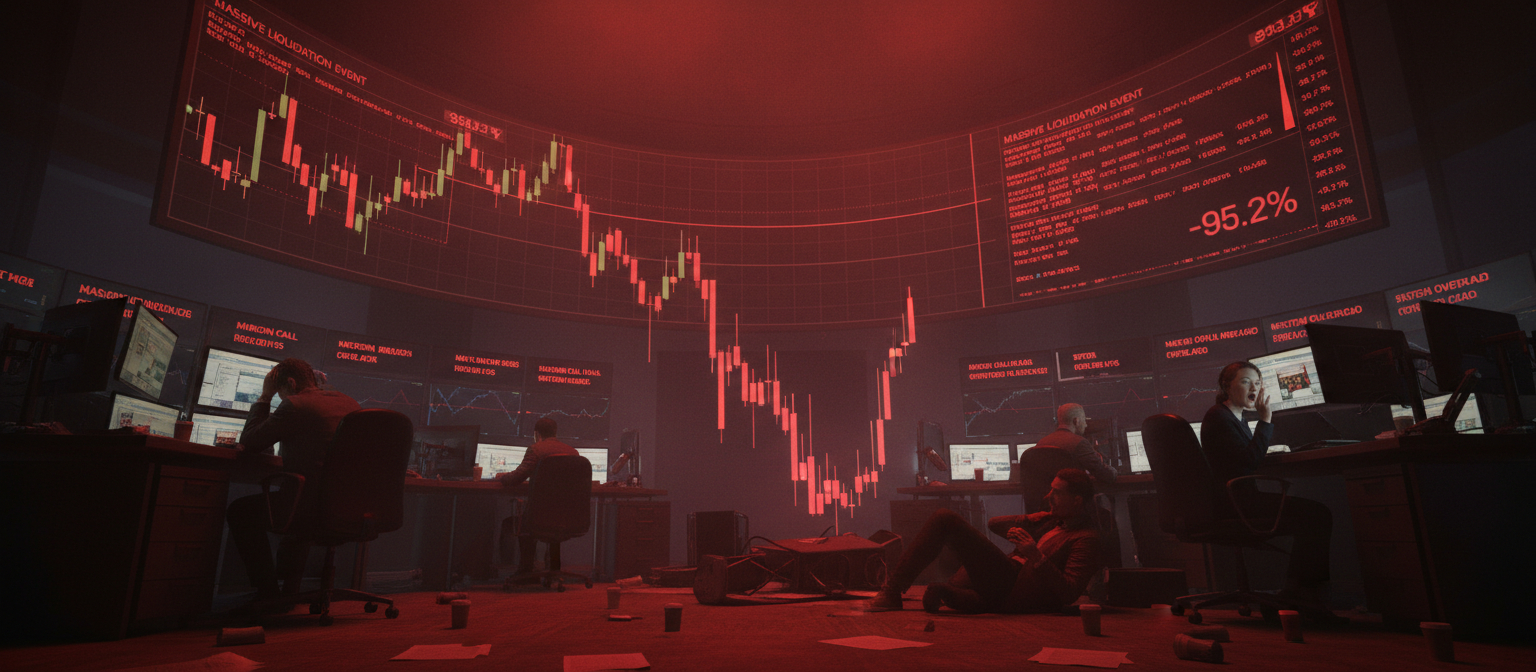
The cryptocurrency market was rocked by a sudden flash crash on Sunday, August 25, as a massive whale offloaded 24,000 BTC—worth over $300 million—into thin weekend liquidity, sending Bitcoin plummeting below $111,000 and triggering a cascade of liquidations totaling more than $550 million across the crypto derivatives market.
The dramatic sell-off erased all gains from Federal Reserve Chair Jerome Powell’s dovish speech on Friday and served as a stark reminder of the market risks posed by concentrated whale holdings and overleveraged trading positions.
The Whale Behind the Crash
The entity responsible for the flash crash had held their 24,000 BTC position dormant for over five years before liquidating the entire balance on Sunday. Blockchain analytics revealed that the whale sent the coins to Hyperunite, a cryptocurrency trading platform, with 12,000 BTC transferred on Sunday alone.
The timing and execution of the sale proved particularly impactful due to reduced weekend trading liquidity. With many institutional traders offline and order books thinner than during weekday sessions, the massive sell order overwhelmed available buy-side liquidity, causing Bitcoin’s price to briefly touch below $111,000 before stabilizing.
The whale’s identity remains unknown, but the scale of the holdings—accumulated years ago and untouched through multiple market cycles—suggests either an early Bitcoin adopter cashing out or a long-term institutional holder executing a strategic exit.
Market Impact and Liquidations
The sudden price drop triggered a devastating wave of forced liquidations across cryptocurrency derivatives exchanges. According to data from multiple trading platforms, $550 million in positions were liquidated within a 24-hour period, with the majority of forced closures affecting long positions.
The breakdown of liquidations reflected the carnage:
- Bitcoin positions: $238 million liquidated
- Ethereum positions: $216 million liquidated
- Other cryptocurrencies: Remaining $96 million
Long traders who had leveraged their positions expecting continued upside from Powell’s Friday comments were caught off-guard as stop-losses cascaded and margin calls mounted. The forced selling from liquidations exacerbated the price decline, creating a self-reinforcing downward spiral characteristic of flash crash events.
By Monday morning Asian trading hours, Bitcoin had recovered somewhat to stabilize near $112,800, but the damage to overleveraged positions was already done.

From All-Time High to Flash Crash
The timing of the crash made it particularly painful for recent buyers. Just twelve days earlier, on August 13, Bitcoin had reached an all-time high of $124,496, extending its 2025 rally and reinforcing bullish sentiment across the market.
That record high came amid growing institutional adoption, positive regulatory developments, and anticipation of Federal Reserve rate cuts. Many traders had positioned for continued upside, using leverage to amplify potential gains.
The rapid reversal from all-time high to a 10%+ drawdown in less than two weeks caught momentum traders off-guard and demonstrated the persistent volatility inherent in cryptocurrency markets despite growing mainstream adoption.
Jerome Powell’s speech at the Jackson Hole Economic Symposium on Friday had briefly boosted risk assets, including cryptocurrencies, as the Fed Chair hinted at upcoming rate cuts in response to cooling inflation. Bitcoin rallied on the news, with many traders adding long positions in anticipation of a favorable macroeconomic environment.
However, the whale’s Sunday sell-off completely erased those Friday gains, leaving late entrants underwater and triggering stop-losses across the market.
Market Recovery and Looking Ahead
As of Monday morning, Bitcoin has begun to recover from the flash crash lows, though trading remains cautious. The swift recovery to $112,800 suggests underlying demand remains strong, with buyers stepping in to accumulate at lower prices.
The incident has sparked renewed discussion about market structure and the ongoing challenges posed by concentrated holdings. While Bitcoin’s distribution has improved over time as institutional adoption has grown, individual whales with massive holdings accumulated during crypto’s early days still have the power to move markets significantly.
Several lessons emerge from Sunday’s flash crash:
Liquidity Risk: Weekend trading, particularly during holiday periods, presents elevated risk due to reduced market depth. Large orders can have outsized impacts when fewer market makers are active.
Leverage Dangers: The $550 million in liquidations underscores the risks of overleveraged positions in volatile assets. Even temporary price dislocations can wipe out highly leveraged traders.
Whale Watching: Blockchain transparency allows traders to monitor large dormant wallets that could potentially become sources of selling pressure when activated.
Looking ahead, traders will be watching key support levels around $110,000-$112,000. A sustained break below this zone could trigger additional technical selling, while a recovery above $115,000 would likely ease immediate concerns and allow the market to refocus on fundamental drivers like Fed policy and regulatory developments.
The Bigger Picture
Despite the flash crash drama, Bitcoin’s 2025 performance remains strong in historical context. Even with the drawdown, BTC is still up substantially year-to-date and has demonstrated increasing resilience through multiple market cycles.
The incident also highlights cryptocurrency market maturation in some respects: The market absorbed a $300 million sell order without completely collapsing, and recovery began within hours rather than days or weeks. In earlier crypto market cycles, similar whale movements often triggered multi-week bear markets.
Nevertheless, Sunday’s events serve as a reminder that cryptocurrency markets—despite growing institutional participation and regulatory clarity—remain subject to volatility and manipulation risks that traditional assets have largely outgrown.
For investors, the flash crash offers a practical lesson in position sizing, leverage management, and the importance of maintaining adequate liquidity buffers during periods of elevated volatility.
This article reflects information available as of August 26, 2025.